Heavy Rainfalls and Harvest Risks
By: Mike Toohill, Consulting Agronomist, AgVenture WSC
September rains HEAVY in most of the western and northern belt with more heavy rains expected from the remnants of Polo…
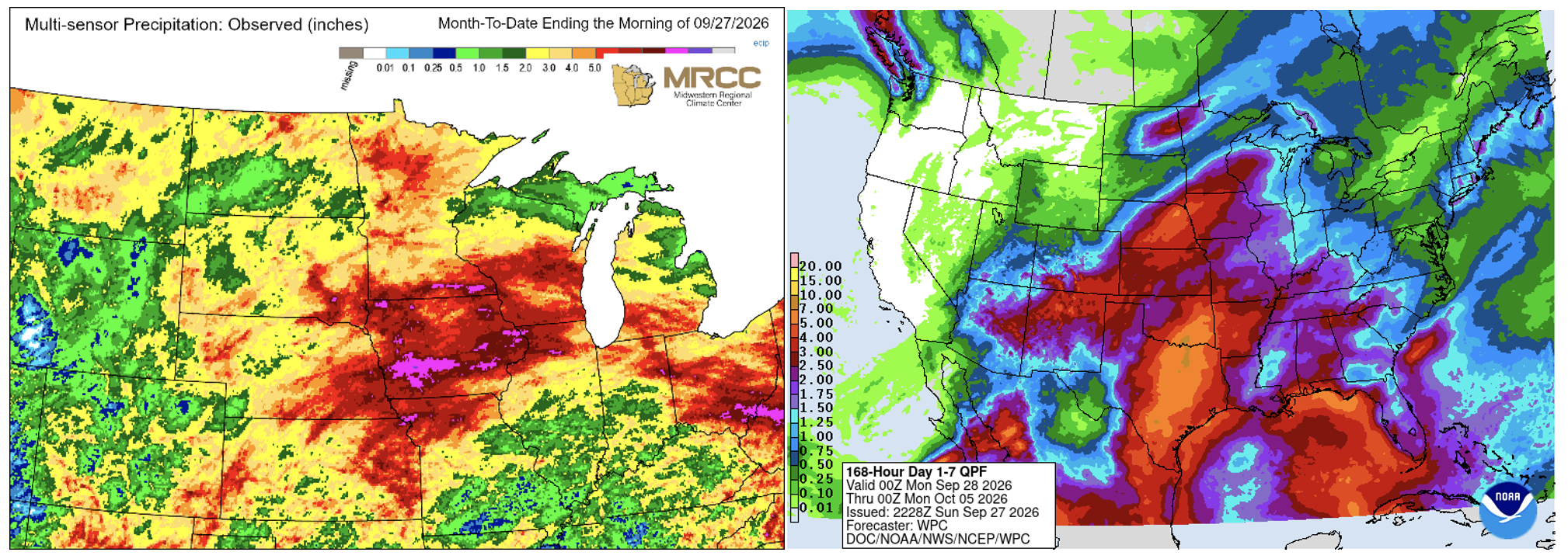
In looking at observed September rains (as of September 27th), Iowa was the “winner” with 10 to 15” amounts somewhat widespread (hot pink on the below left map). Heavy rains also fell in parts of northern North Dakota, most of South Dakota, Minnesota and Wisconsin, eastern Nebraska and Kansas, the northern parts of Missouri, Indiana and Illinois along with much of Ohio. As far as expected QPF 7-day rains as of September 28th, the WPC has soakers for almost every acre of the Great Plains and central and western belts.
The biggest issues in heavy September rain areas:
We’ll start with the most obvious, corn and soybean harvest delays. Harvested beans were so scarce in Iowa and Nebraska last week that some processor bids were in the $14s. Compaction is likely as growers face mud at least during early October. Delays getting the crops out also lead to delays getting ready for next year.
Corn is slow to dry in wet and cloudy areas. Numerous comments from growers in damp areas that their corn only dropped a point or two (if at all) during the last week or so.
Corn ear molds and sprouts. Most pictures of moldy sprouting ears are coming out from Iowa. The grain usually looks worse in the field shucking back ears than in the hopper when the weather transitions to warm and dry prior to harvest. If warm rains and high humidity persist into October, the molds and sprouts continue to get worse though. Contact your crop insurance provider prior to harvest if you think you might have issues. Storing corn with molds and sprouts is challenging. If you decide to dry and store on the farm, screen thoroughly and get it dry and cooled as fast as you can. Monitor often once it is put away. Don’t expect it to keep long term. Getting the grain into commercial “hands”/storage is usually best for the grower if quality/storability is questionable?
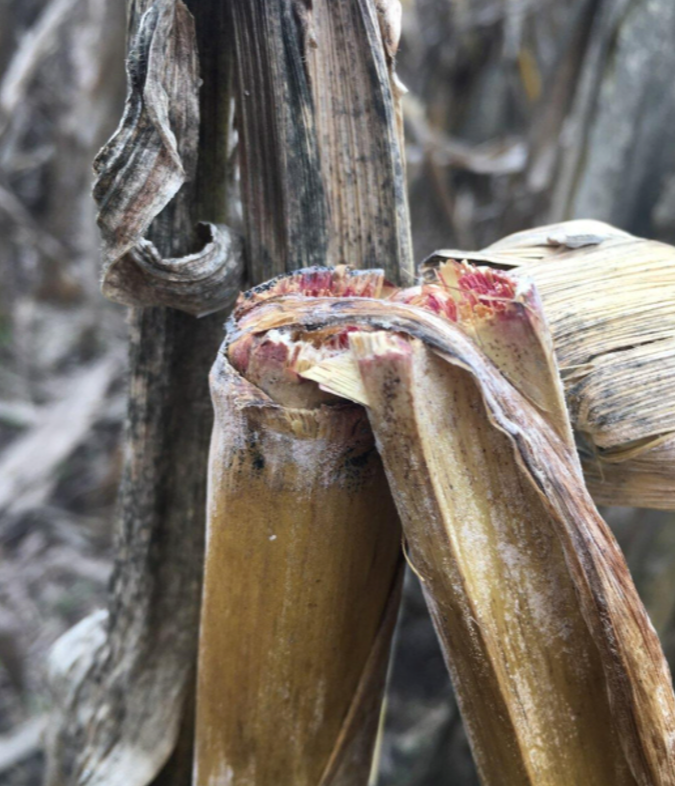
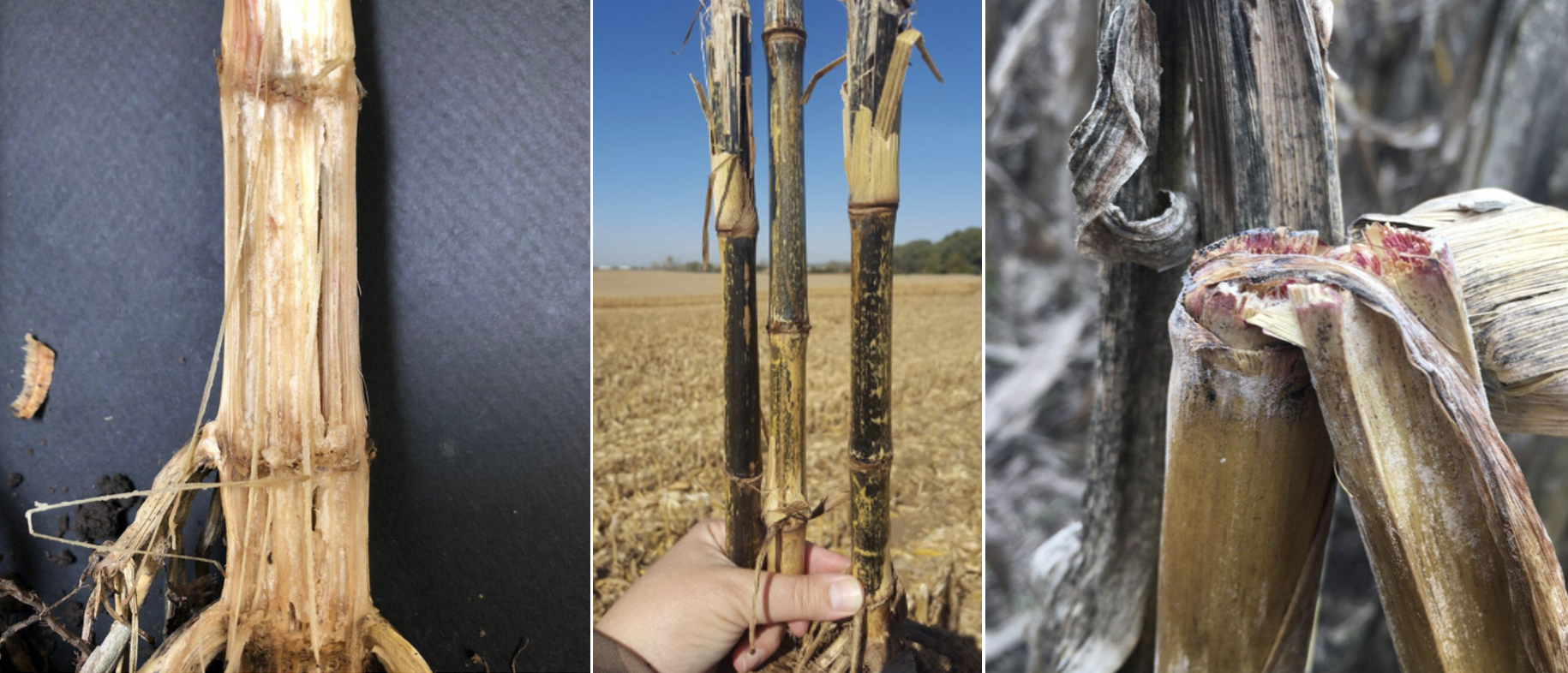
Crown and/or stalk rots. The main ones to watch out for are Fusarium which is white to salmon colored rot/decay (below left) and Anthracnose (below center) with lots of black on the outside of the stalk being its most distinguishing characteristic. If you are seeing more red in the stalk, it’s most likely Gibberella (below right). Prioritize affected fields and get them out as quickly as possible.
Reduced soybean yields from rain delays, especially in fields that were close to testing before the heavy rains started. The more wet to dry moisture “cycles” before harvest, the higher the potential yield declines due to reductions in seed weight/quality. Pod “splits” can also occur in these situations leading to increased beans on the ground. Molds, rots and sprouts can also develop in constantly wet conditions leading to dock and/or storage issues. As with corn, contact your insurance provider prior to harvest if you think you might have damage. On farm storage issues are also probable. “Shatter” becomes more likely if hot, low humidity weather occurs after the rains stop.
Delays in winter wheat seeding and cover crop planting.
Hope is on the horizon… Drier weather is expected for most of the western, northern and central Corn Belts starting around October 2nd.
Related Articles