2026 Midwest Yield Prospects Looking Pretty Good
By: Mike Toohill, AgVenture WSC
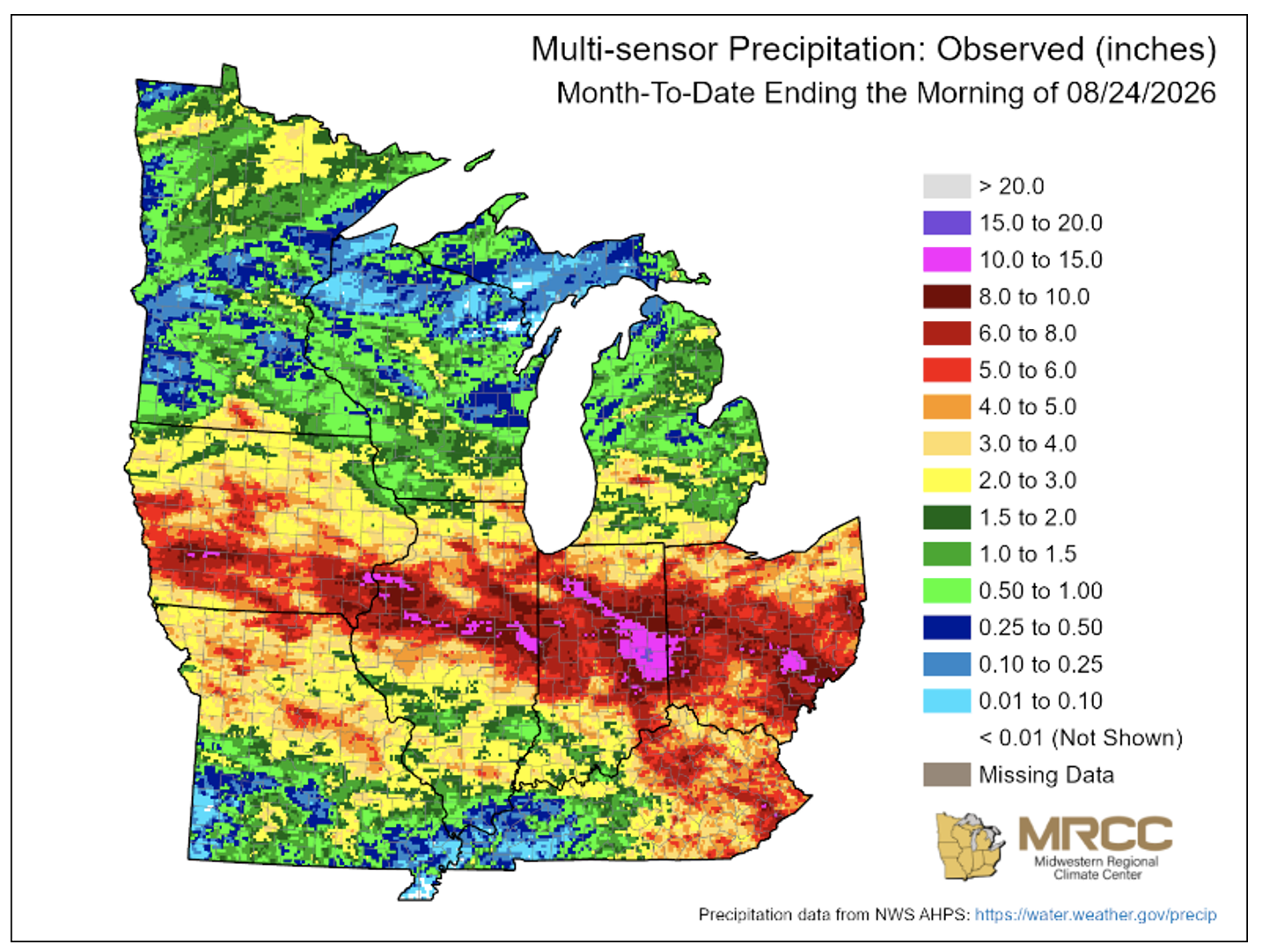
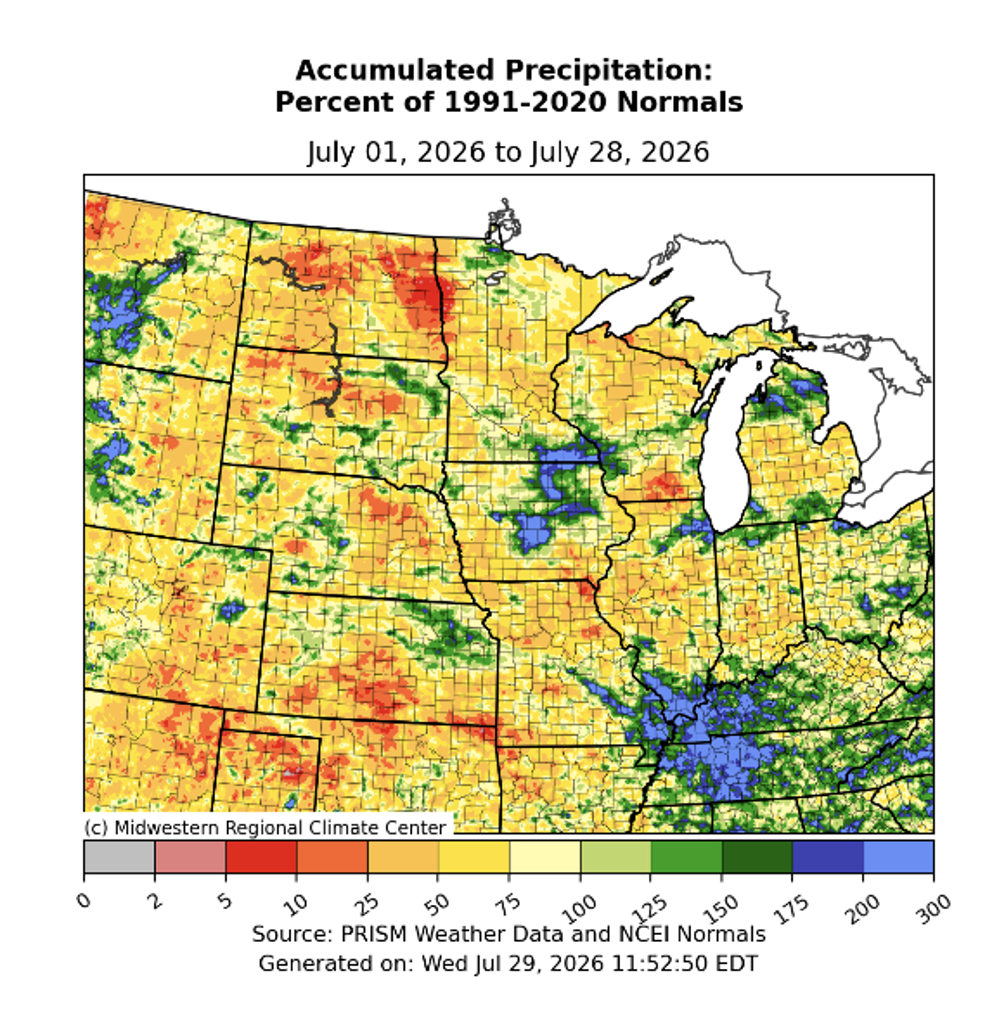
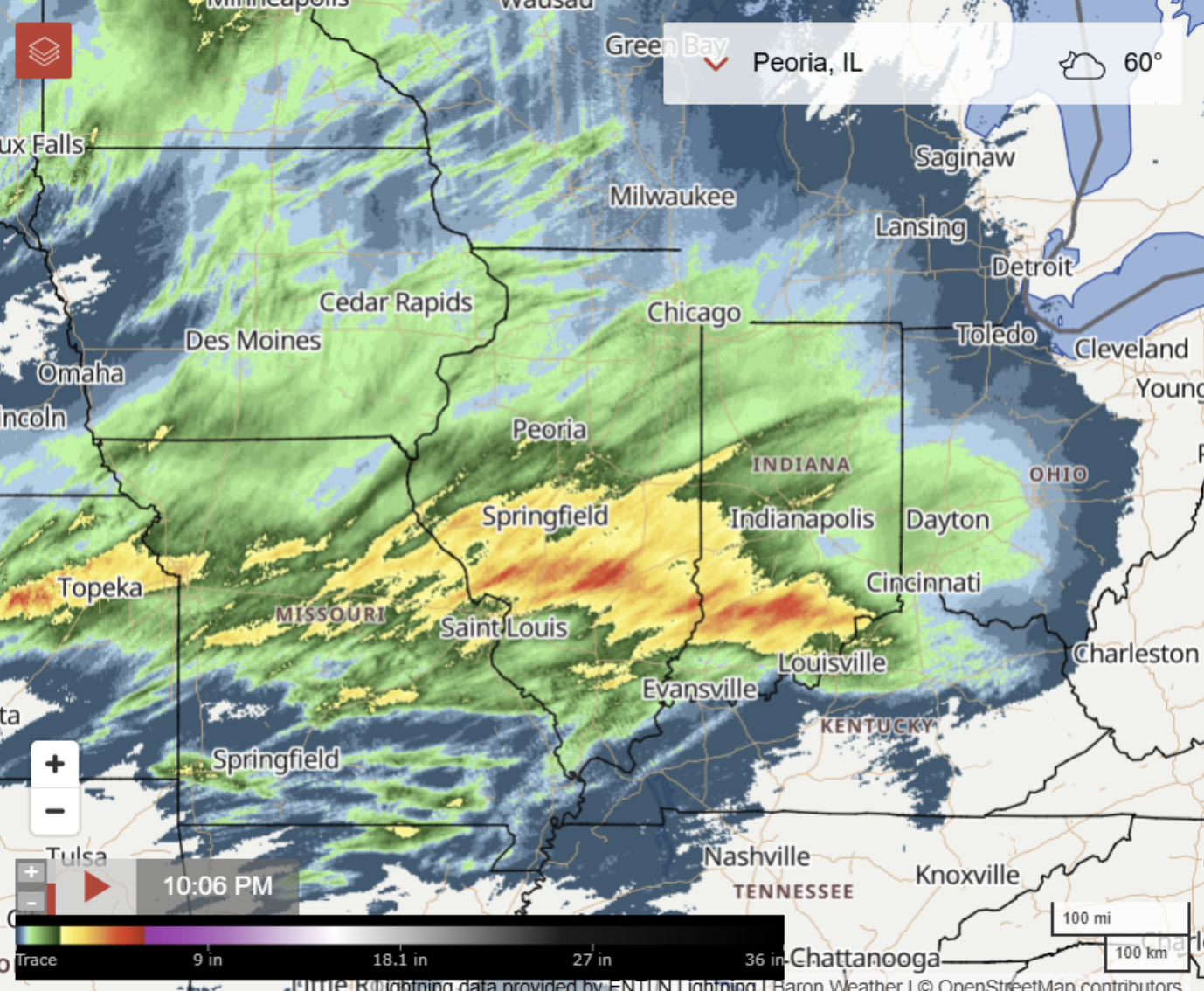
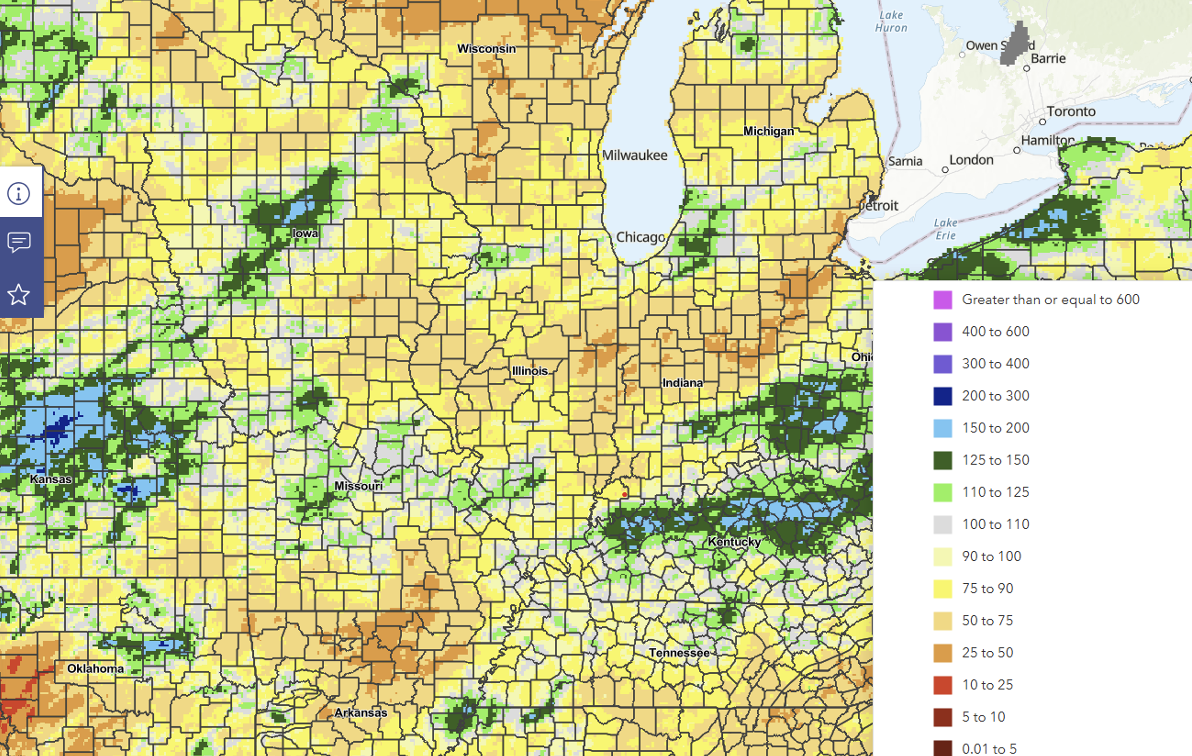
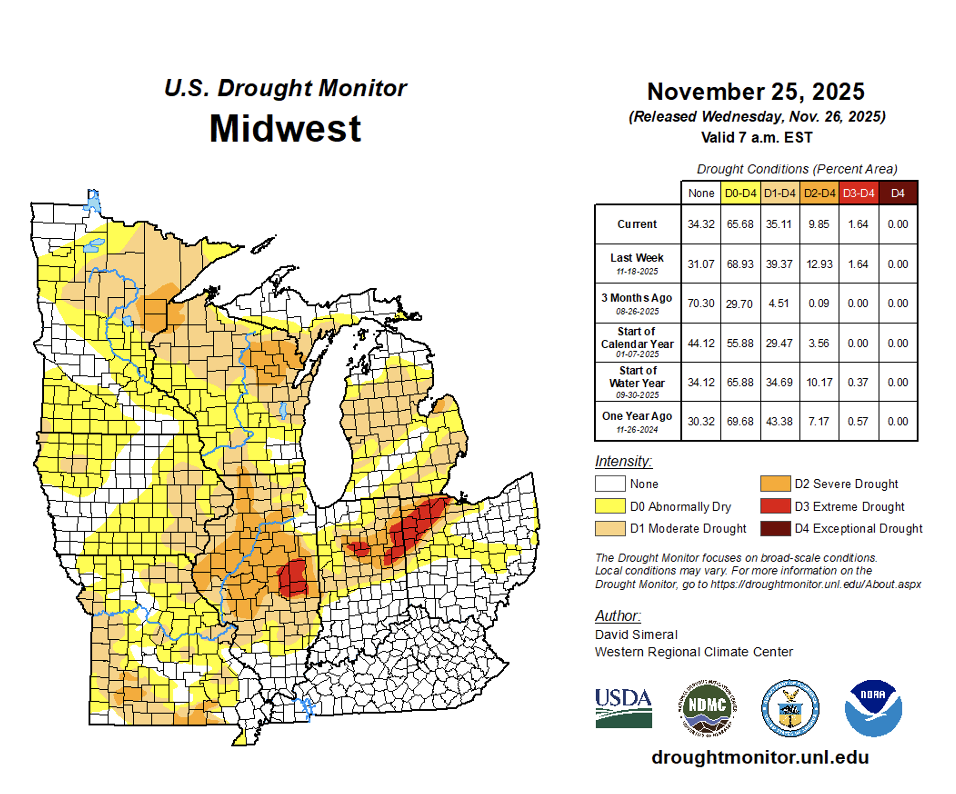
While most of today’s information is positive for 2026 crops, fall soil moisture was on the short side in most of the Midwest. The 60-day % of normal observed precipitation map “centered” on Illinois is still pretty dry (especially eastern Iowa through central Ohio, and most of Nebraska and Wisconsin) but the map does look better after the heavy weekend snows. The current Midwest Drought Monitor Map is also below. I suspect that we will see a little less color when that map is updated.
The longer list of positives for 2026 yield prospects after the snow:
It was an excellent fall for getting fields ready for 2026. Lots of different opinions on this topic, but I don’t think I have ever seen as many fields of soybean stubble with some form of tillage heading into winter in my central Illinois “backyard”. Most of them are smooth and are just a herbicide (with maybe some liquid N) and an incorporation pass from being corn planter ready. It also seems like growers did more tillage in the corn stalks than in previous years, in Illinois anyway. The soybean planters should also be ready to roll if the weather cooperates and we get a mid-April window.
After some warm November days, fall NH3 should be “resting” now extending inhibitor persistence. With the significantly higher cost per #N of liquid solutions compared to NH3, it also seems like more ammonia was applied than normal this fall in areas where customary. Despite the dry soil conditions in most areas of the Midwest, it seems like “seal” was still good. Add in the cold soils under the snow, and the fall NH3 is in good “shape” heading into meteorological winter.
Although snow cover is limiting frost penetration in most areas of the I-States currently, the early to mid-December forecast looks good for at least some surface freeze/thaw and maybe a little deeper frost penetration. Midwest soils always seem to have the best chance for very high yields after a very cold winter with numerous freeze/thaw cycles and a deep freeze. Why? Soil expansion, constriction and fracturing almost always results in excellent topsoil structure with improved water infiltration rates. Tougher soil types seem to get the biggest “boost”. Over years, corn seems benefit more from a cold winter than soybeans. The main negative to getting this cold this early is that residue breakdown will stop until soils warm back up.
Related Articles